
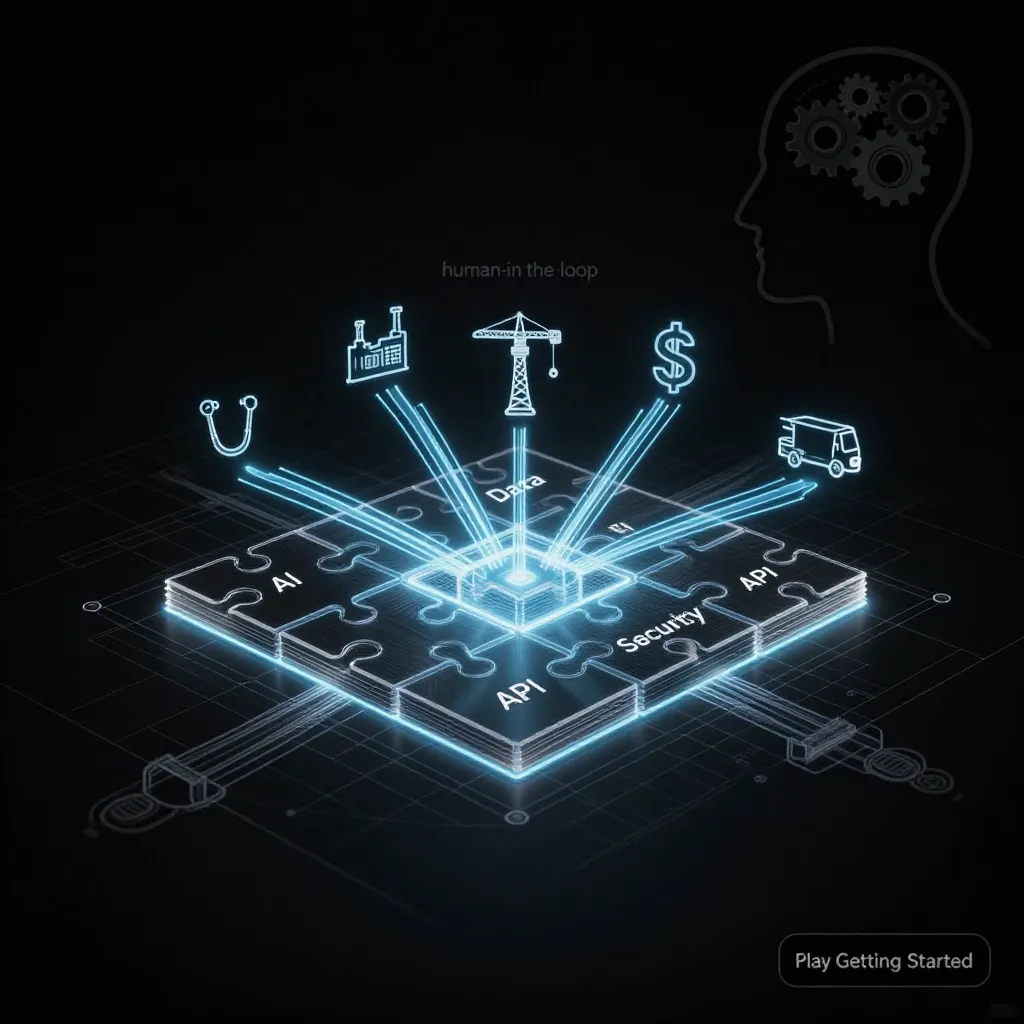
One of the most significant developments in AI tooling over the past year is the emergence of Model Context Protocol (MCP) tools. These integrations are changing how AI assistants interact with external services and data sources — moving AI from a conversational layer to an active participant in real workflows.
What MCP tools are
MCP tools provide a standardized way for AI models to connect with external services and applications. Think of them as bridges that allow an AI assistant to interact with your email, project management software, cloud storage, or content management systems — not just discuss them, but actually use them. Instead of answering questions about your calendar, an MCP-equipped assistant can read it, create events, and move tasks.
What they make possible
In practice, MCP tools extend AI capability well beyond text generation. Marketing teams can have an assistant draft and publish posts directly to WordPress. Development teams can integrate with version control systems. Business users can connect CRM platforms and have AI pull customer data and generate summaries on demand. The common thread is that natural language becomes an interface to systems that previously required dedicated apps and manual switching.
Security and access control
A key consideration with any integration layer is trust. MCP tools are designed with explicit authentication mechanisms — the AI assistant only accesses services and data that the user has explicitly authorized. Permissions are scoped, auditable, and revocable. This creates a controlled environment where automation is possible without sacrificing accountability.
Where things are heading
The MCP ecosystem is expanding quickly. More services are adopting the protocol, and the range of available integrations is growing. The longer-term direction is toward AI assistants that can orchestrate complex, multi-step workflows across platforms — handling the connective tissue between tools that currently requires manual effort. We’re in the early stages of that shift, and bacher-ai.com is built around it.
Key Takeaways
- MCP tools give AI assistants a standardized way to connect with and act on external services.
- They move AI beyond text generation into real workflow participation — reading, writing, and triggering actions.
- Access is always user-authorized: explicit permissions, scoped to what you’ve connected.
- The protocol is gaining adoption quickly, with more services integrating every month.
- The direction is toward AI that orchestrates multi-step workflows across platforms with minimal manual effort.
Image: generated by bacher-ai.com